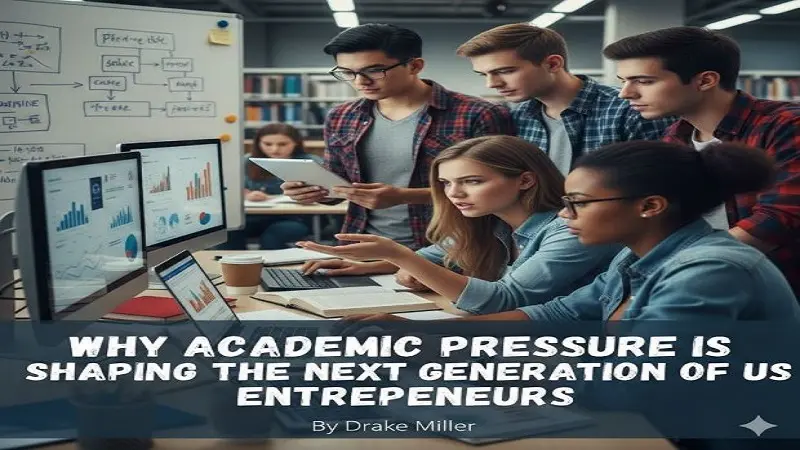
In the modern American educational landscape, the definition of a “student” is undergoing a radical shift. No longer just passive absorbers of information, today’s high school and college students are operating like early-stage CEOs. They manage high-velocity schedules, navigate hyper-competitive admissions, and leverage complex digital tech stacks to optimize performance.
While the “grind culture” conversation rightfully focuses on mental health, there is an overlooked byproduct: academic pressure is inadvertently becoming the ultimate incubator for the future American founder.
If you are a student buried under AP courses or a multi-year thesis, you aren’t just earning a degree; you are in a high-intensity bootcamp for the business world. Here is why today’s academic stress is the fuel for tomorrow’s startups.
1. The Mastery of “Crisis Management” and Pivoting
In entrepreneurship, the “pivot” is a survival skill. Whether a funding round falls through or a supply chain breaks, a founder’s value is defined by their calm under fire.
Students face a microcosm of this every finals week. Balancing a 20-page research paper with a group project where team members are “ghosting” requires high-level emotional regulation. When a student stays up to restructure an entire argument at 2:00 AM because a primary source was debunked, they are practicing the strategic pivot that every tech founder must eventually master.
2. Strategic Delegation: The Efficiency Mindset
A vital lesson in business is that you cannot scale alone. Growth is dependent on effective delegation. Modern students are reaching this realization earlier than ever due to the sheer volume of work assigned in US universities.
Students are forced to prioritize tasks based on Academic ROI (Return on Investment). They learn to identify which tasks require their unique creative “voice” and which are technical burdens that can be streamlined.
This is where the savvy student acts like a manager. When technical bottlenecks or complex formatting requirements threaten their primary focus, they leverage professional support systems. For instance, many top-tier students utilize Myassignmenthelp.com to bridge knowledge gaps and seek revit assignment help when tackling complex architectural modeling and design projects. This isn’t just about finishing a project; it’s about resource management—knowing when to seek expert consultation to ensure the highest quality output under a deadline.
3. High-Stakes Decision Making & Opportunity Cost
The American “College Prep” track is essentially a series of high-stakes risk assessments. Choosing between an extra STEM lab or a leadership role in a non-profit involves weighing Opportunity Cost.
Entrepreneurs live in a world of trade-offs: Should I spend the budget on R&D or Marketing? By graduation, a student has spent years making similar trade-offs with their most precious currency: time. This constant weighing of outcomes prepares them for the ruthless decision-making required in the boardroom. In moments of overload, some students even search for solutions like help me do assignment to strategically manage their workload and protect their time for higher-value activities.
4. The “Hustle” as a Baseline for Grit
For the average US high schooler, the day doesn’t end at 3:00 PM. Between SAT prep, varsity sports, and community service, the “9-to-5” concept is obsolete before they hit 18. This builds a specific kind of entrepreneurial stamina. While work-life balance is crucial, the “Seed Phase” of a startup requires immense grit—a muscle these students have already flexed for years.
5. Personal Branding and Tech-Native Productivity
With acceptance rates at top-tier US institutions hitting record lows (often sub-5%), students are forced to find their Unique Selling Proposition (USP). They are the first generation to use Large Language Models (LLMs) and AI productivity stacks as standard educational tools. They aren’t just using technology; they are “hacking” their productivity with it. This fluency is the backbone of modern entrepreneurship.
Conclusion: From the Classroom to the C-Suite
The pressure cooker of modern education is creating a generation of disciplined, tech-savvy, and resilient leaders. Success in 2026 is a mix of hard work, strategic delegation, and the ability to handle intense pressure. Whether it’s knowing when to pull an all-nighter or when to utilize a service like MyAssignmentHelp to ensure a project meets professional standards, these students are developing the “founder’s instinct.”
Frequently Asked Questions
Q.1 Is academic pressure actually beneficial for a career in business?
While chronic stress is a challenge, the skills developed to manage high academic loads—such as time blocking, strategic prioritization, and resilience—directly mirror the demands of the startup world. Michael Haydon notes that the modern classroom acts as a “low-stakes laboratory” for high-stakes professional decision-making.
Q.2 How can students balance high GPA requirements with building a side hustle?
The key is Strategic Delegation. Successful student entrepreneurs treat their education like a business, focusing their personal energy on core subjects and high-impact projects while utilizing academic support tools for technical or time-consuming tasks.
Q.3 What are the best digital tools for students to manage academic and business workloads?
In 2026, a “tech stack” is essential. We recommend a combination of:
- Notion/Obsidian: For centralized knowledge management.
- Slack/Discord: For project communication.
- MyAssignmentHelp: For expert academic consultation and technical project support.
- AI Productivity Suites: For brainstorming and rapid drafting.
Q.4 Does “Grind Culture” in US schools lead to better founders?
It builds “endurance muscles,” but the most successful founders are those who learn to work smarter, not just harder. Learning to leverage resources like Myassignmenthelp.com early on teaches students the most important CEO skill of all: knowing when to outsource to maintain quality and scale.
About the Author: Drake Miller
Drake Miller is a senior content strategist and academic consultant at Myassignmenthelp. With over a decade of experience in the educational technology sector, Drake specializes in analyzing the intersection of student productivity and professional development. He has contributed to numerous high-authority business and education journals, focusing on how digital transformation and academic rigor prepare Gen Z and Gen Alpha for the global workforce.